

Starting from the Nokia N9, a term about mobile phone screens gradually became known to people, which is called "2.5D glass". In recent years, more and more phones have started using this curved edge glass as screen covers, from the globally popular iPhone 6, to Samsung's Note4, and domestic manufacturers such as vivo and Xiaomi are all using 2.5D glass. It can be said that at present, 2.5D glass is the first choice for many mobile phone manufacturers.
So many people may have this question, what is 2.5D glass and what are its advantages?
What is 2.5D glass?
Firstly, let's clarify a question: what is 2.5D glass. Our traditional sense of glass is flat, and no matter what point you choose on the glass, it should be on the same plane as other points on the glass. The biggest difference between 2.5D glass and ordinary glass is that although the front of this type of glass is also flat, the edges will be concave downwards into an arc shape.
Unlike 3D glass, the biggest difference of 2.5D is that the entire part covering the LCD panel is flat, which has the advantage of not causing visual differences. You can try throwing a ball shaped glass over the phone screen, and you will find that you must be perpendicular to the screen to see the normal image, otherwise it will deform. 2.5D glass solves this problem very well, as the part covering the LCD panel is flat and will not cause image distortion when viewing the screen from the side.
Are you going to ask, since the top is flat, why do we have to make it curved all around when we're full?
The benefits of 2.5D glass
The primary reason why 2.5D glass is so popular is its high aesthetic value. The problem with using flat glass in the past was to enhance the impact resistance of the glass. Usually, manufacturers embed this piece of glass in the middle frame, which brings about the problem that the entire glass is lower than the middle frame. Coupled with the outer frame of the screen, visually, a phone will be divided into many layers in the screen frame, making it look quite messy.
The curved edge of 2.5D glass effectively solves this problem. The height of 2.5D glass is higher than that of the middle frame, so the entire screen seems to be placed on the middle frame, which looks quite full and there is no visible outer frame. Visually, it is much better than flat glass.
The second benefit is the tactile sensation. The 2.5D glass is almost 180 degrees aligned with the center frame, so the edge of the screen is not as 90 degrees as in previous phones, so the feeling of touching it with fingers is not as uncomfortable. At the same time, imagine that when you hold your phone with one hand and the tiger mouth of your palm touches the border for a long time, is a screen with edges better or a screen without edges better? The answer is obviously the latter.
Some minor issues currently faced by 2.5D glass
Of course, although many phones currently use 2.5D glass as the screen cover, there are still more phones that use traditional flat glass. Why? The reason is simple: the process of 2.5D glass is more complex compared to flat glass, so from a cost perspective, 2.5D glass is more expensive than ordinary glass. According to previous data, the actual cost price of a 2.5D glass of the same size is 2-3 times that of a regular glass.
Many people are concerned about whether 2.5D glass suspended on a metal frame will affect the hardness of the screen. In fact, there is currently no data to prove that 2.5D glass is more fragile than ordinary glass. For example, Corning's Gorilla III and IV glass have 2.5D versions, which are as hard as ordinary flat glass.
However, due to the higher cost of 2.5D glass, if your phone screen breaks, the price of replacing it will definitely be more expensive. In addition, the screens of current phones are designed to fit snugly, so if the screen breaks, it is very likely that you will have to pay more than half of the price of your phone to replace them.
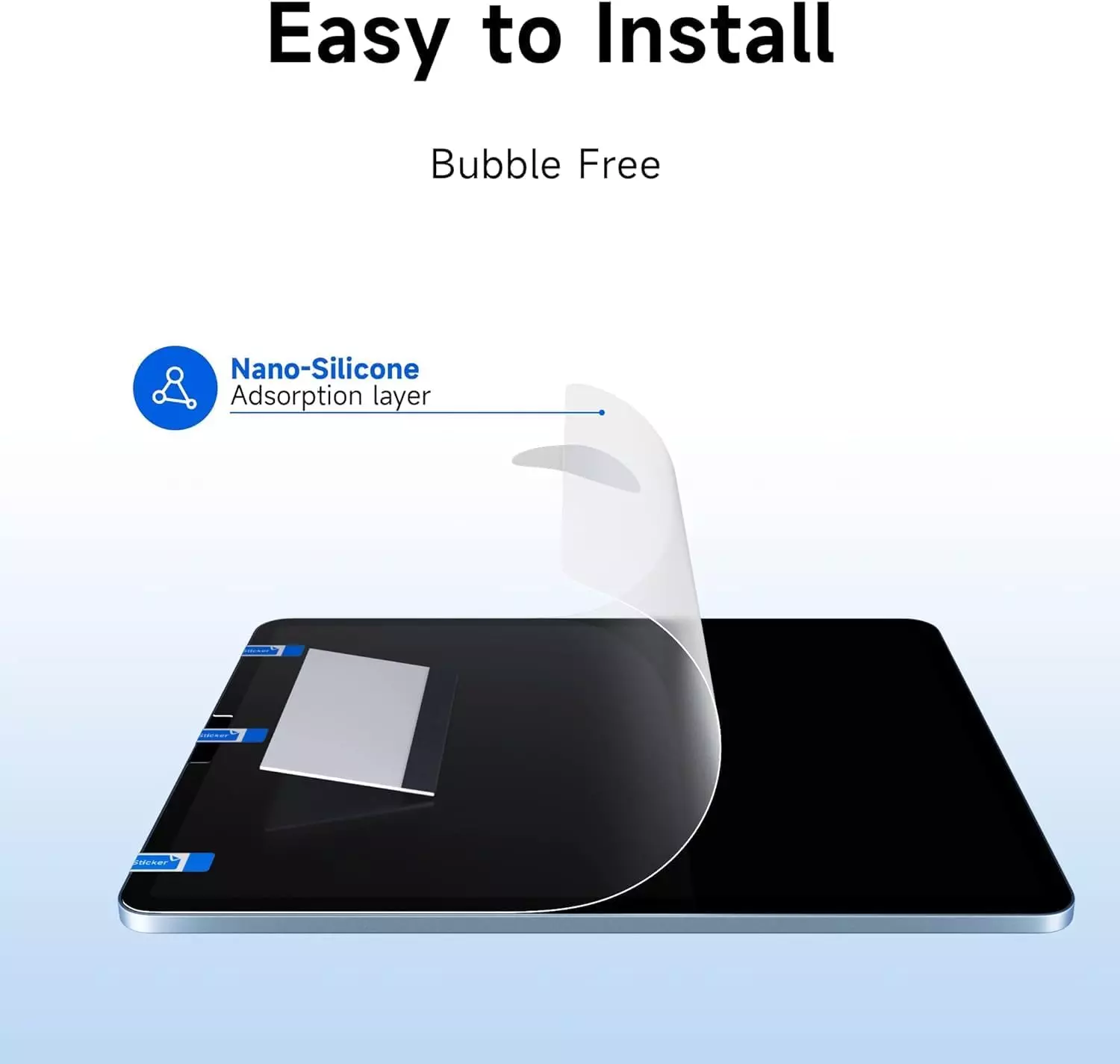
There is another non problem question. 2.5D glass has curved edges, so phones equipped with 2.5D glass cannot be properly coated with film. You can only buy a film to stick on a flat surface of the screen.

